
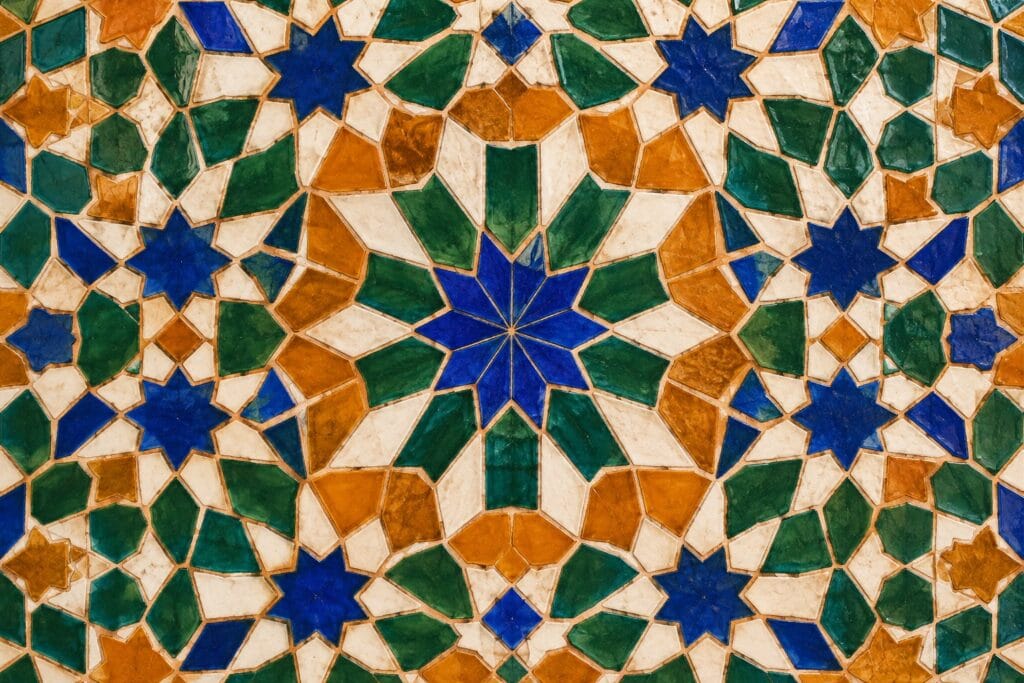
Moroccan tile is admired around the world for its vivid colors, intricate geometry and unmistakable handcrafted character. In Morocco, one of the finest expressions of this tradition is zellige (also written zellij or zillij): glazed terracotta pieces cut and assembled to create decorative mosaics.
Look closely at a fountain in Fez, a historic courtyard in Marrakech or an artisan’s workbench, and you begin to see the story behind the pattern. Zellige is not simply a surface finish. It brings together knowledge of clay, firing, geometry and careful handwork, often passed from one generation to another.
This guide explains what Moroccan zellige is, how it developed, how craftspeople make it, what its patterns reveal and where visitors can appreciate this living heritage.
What Is Moroccan Zellige Tile?
Traditional Moroccan zellige is a type of ceramic mosaic. Artisans begin with glazed terracotta tiles and cut them into smaller shapes that fit together to form geometric arrangements. Repetition and symmetry allow simple elements to produce extraordinarily complex designs.
The word Moroccan tile is broader. It may refer to zellige mosaics, decorative ceramic tiles, painted tiles or even modern cement tiles inspired by Moroccan ornament. These materials can resemble one another in photographs, but their manufacturing processes are different.
There is another distinction worth knowing: in today’s design market, zellige tile sometimes refers to individually laid, irregularly glazed terracotta squares. Those tiles can be handmade, but they should not automatically be confused with the traditional mosaic technique in which each piece is cut to form a larger geometric composition.
A Brief History of Zellige in Moroccan Architecture
Zellige belongs to a long history of craftsmanship and artistic exchange across Morocco and the western Islamic world. Its exact beginnings cannot be reduced to a single date or one inventor. The Hassan II Mosque Foundation traces the use of zellige in Moroccan architecture back to the twelfth century.
Its role became especially visible in the architectural achievements of medieval Moroccan cities. Fez flourished under the Marinid dynasty during the thirteenth and fourteenth centuries, when important schools, palaces, fountains and religious buildings were developed. The UNESCO World Heritage Centre’s account of the Medina of Fez describes the city as a place where local building skills combined with influences from al-Andalus, the eastern Islamic world and Africa.
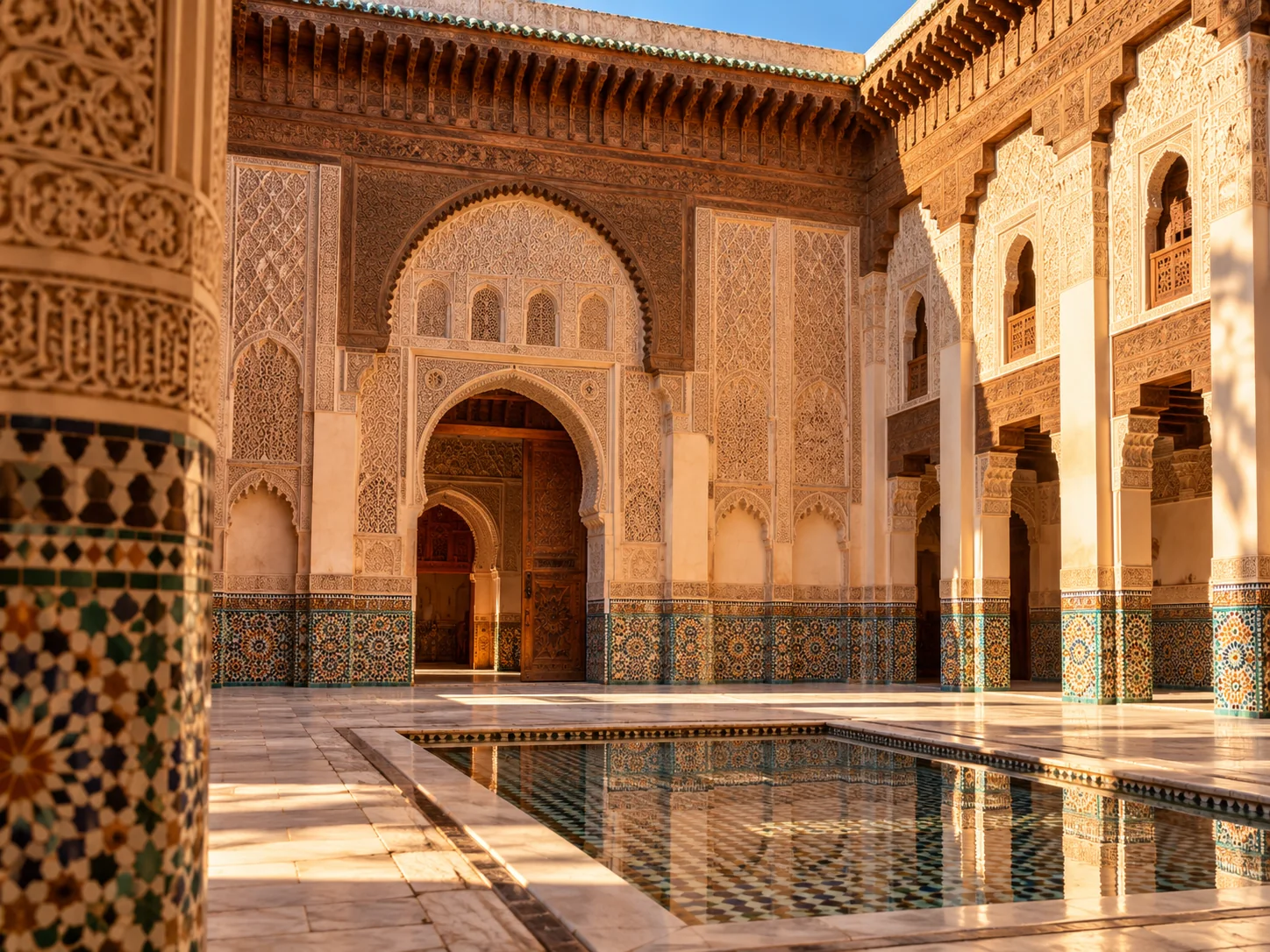
Zellige was part of an architectural ensemble rather than an isolated decoration. Colorful tiled surfaces could appear alongside carved stucco, cedar wood, calligraphy, courtyards and water features. Their effect depended on light, proportion and the relationship between many different crafts.
How Is Traditional Moroccan Zellige Made?
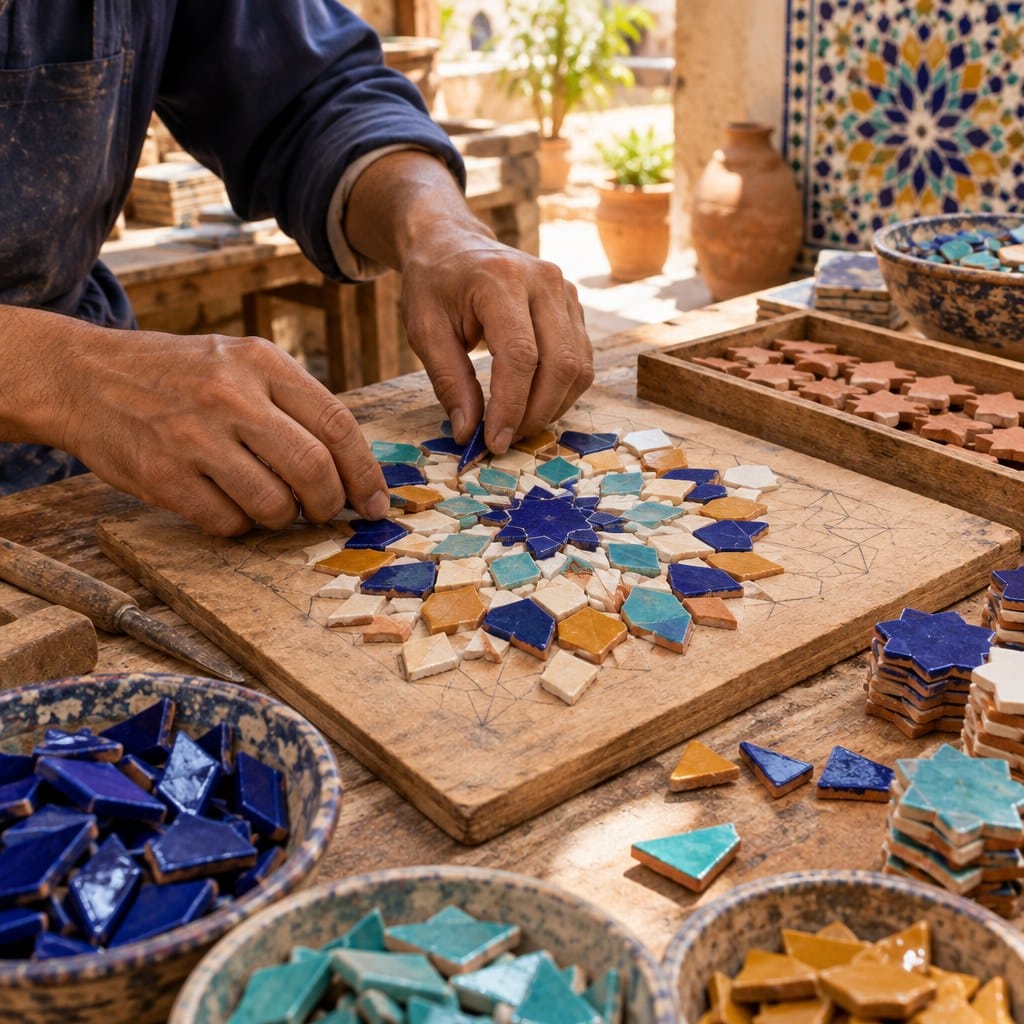
Every finished mosaic represents a series of demanding steps. Exact methods differ between workshops, but the fundamental process has been documented by the Hassan II Mosque Foundation and the Moroccan National Tourist Office.
1. Preparing and shaping the clay
Clay is mixed with water, worked into a suitable consistency and shaped into flat tiles. The prepared material must be dried and fired before it can become a durable ceramic surface.
2. Applying glaze and color
The ceramic is coated with a colored glaze and fired according to the workshop’s technique. Small variations in glaze, clay and firing help give handmade tiles their distinctive appearance. This is one reason two pieces may not reflect light in exactly the same way.
3. Cutting each shape by hand
A skilled craftsperson marks the desired shapes and cuts them using traditional tools, including a specially shaped hammer. Stars, triangles, lozenges and other pieces must be carefully sized so that the final pattern fits together.
4. Assembling the mosaic face down
The pieces are arranged with their glazed surfaces facing downward. The artisan follows the planned composition in reverse, an exacting process that requires both experience and an understanding of the complete design. A backing material binds the pieces before the finished panel is installed.
In Morocco, the term maâlem is used for a master craftsperson. Mastery of the cutting and assembly process comes through sustained training and practice.
Moroccan Tile Patterns: The Beauty of Geometry
One reason Moroccan tile patterns are so recognizable is the relationship between simple shapes and complex repetition. Squares, triangles, polygons and star-like forms can be repeated, rotated and interlocked until the viewer sees a continuous surface rather than separate pieces.
Stars and interlacing forms
Multifoil and star-shaped compositions create striking visual centers. Some designs are built around eight-pointed stars, while others involve more elaborate arrangements. The geometry is not merely decorative: a craftsperson must understand how the pieces fit together across an entire panel.
Squares, lozenges and borders
Smaller shapes help organize an arrangement, fill gaps and create frames around larger elements. Borders can guide the eye around a fountain, doorway or courtyard wall.
Color and light
Blue, green, white, yellow, dark brown and other colors appear in Moroccan mosaic traditions. Their distribution can make a pattern feel calm, dense, radiant or rhythmic. It is tempting to give each color one fixed symbolic meaning, but such universal interpretations are rarely justified without a specific historical source.
When looking at an old panel, ask three questions: Which shapes repeat? Where is the line of symmetry? How does the pattern relate to the surrounding architecture? These observations reveal more about the design than a generic chart of supposed hidden meanings.
Where Can You See Historic Zellige in Morocco?
Fez: a major center of Moroccan craftsmanship
Fez is closely associated with the production and preservation of traditional zellige. Its historic medina remains a major example of Morocco’s architectural and artisanal heritage. When exploring historic buildings, look at the meeting points between tiled walls, carved plaster and wooden details; each material contributes to the composition.
The UNESCO description of Fez emphasizes the continuity of skills and urban culture within the medina. The Moroccan National Tourist Office also identifies Fez as a leading center of zellige production.
Marrakech: zellige at the Bahia Palace
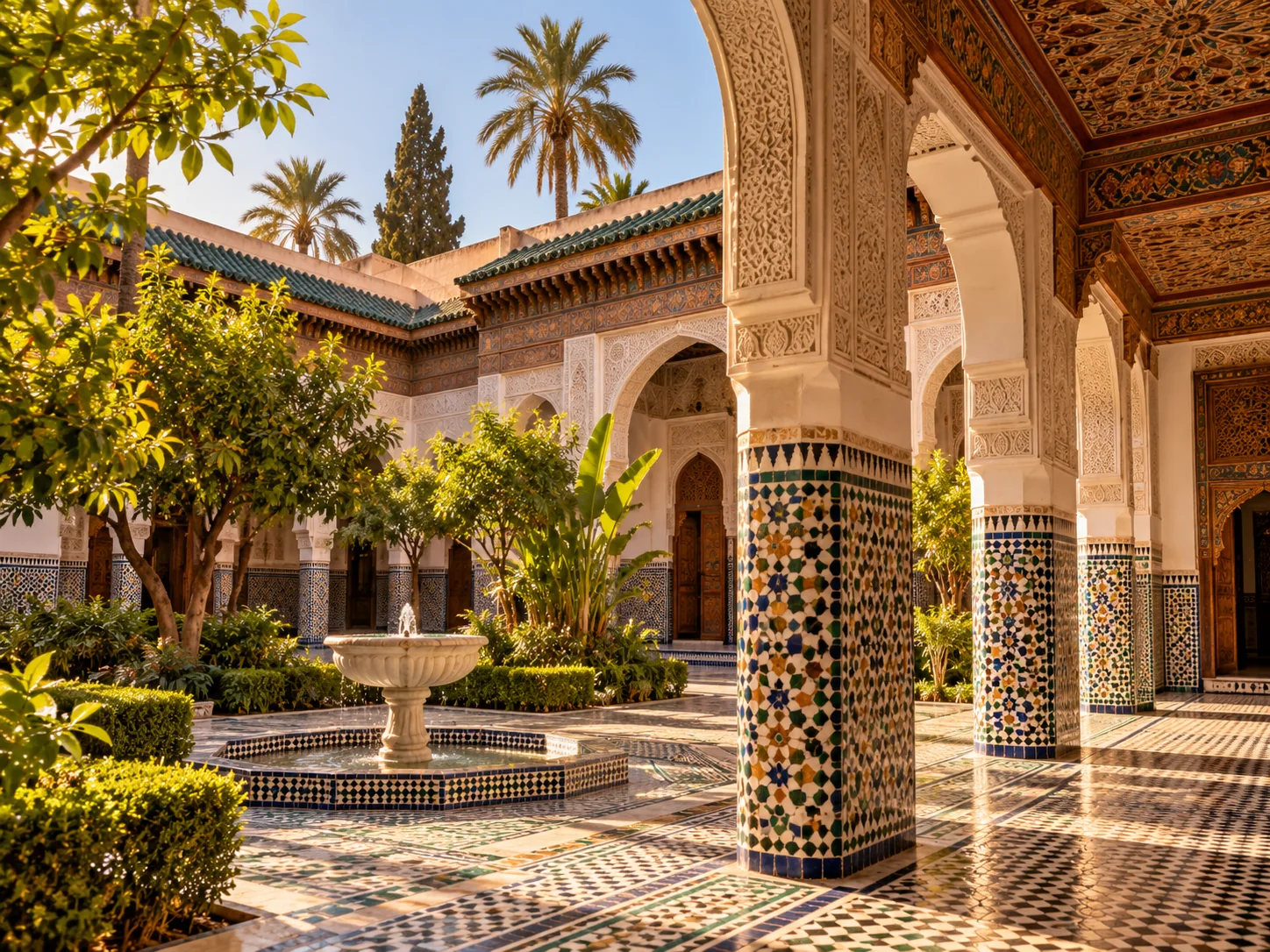
In Marrakech, the nineteenth-century Bahia Palace offers an opportunity to see Moroccan craftsmanship in an architectural setting. According to Morocco’s Ministry of Culture, the palace’s courtyards and rooms combine zellige with marble, carved wood, stucco and other decorative arts.
Rather than viewing each motif separately, notice how geometric decoration helps shape the experience of moving from one courtyard to another.
Casablanca: the Hassan II Mosque
The Hassan II Mosque is a prominent modern example of Moroccan craft traditions on a monumental scale. Its official foundation describes both the zellige manufacturing process and the architectural areas decorated with mosaics. The site demonstrates how a long-established technique can be applied to a major contemporary monument.
How to Recognize Handcrafted Zellige
If you are comparing Moroccan tile products, photographs alone may not tell you what you are buying. A factory-printed tile can reproduce a geometric image without using the traditional mosaic-making process.
- Ask about the material: is the surface glazed terracotta, cement, porcelain or a printed decorative panel?
- Look at the construction: is the design assembled from multiple hand-cut pieces or printed onto a single tile?
- Observe variations: subtle differences in edges, color and reflected light may indicate handwork, although irregularity alone does not prove authenticity.
- Ask about the maker: can the seller identify the workshop, artisan or place of production?
- Check the intended use: decorative artwork, wall tile, floor tile and printable pattern files are different products with different practical requirements.
This distinction matters because a modern Moroccan-inspired design can be attractive and useful without being an original handcrafted ceramic mosaic. Accurate descriptions respect both the traditional artisan and the contemporary designer.
From Historic Moroccan Mosaics to Contemporary Design
Today, zellige continues to influence architects, interior designers and digital artists. Its repeating patterns can inspire posters, stationery, textiles, graphic compositions and personal creative projects. The colors and geometric structures are adaptable, even when the materials are completely different from fired clay.
There is value in preserving the distinction. A printable pattern inspired by zellige is a contemporary illustration, not a historic mosaic or a substitute for the work of a ceramic artisan. Clear attribution to Moroccan craft traditions helps viewers appreciate where the inspiration came from.
For more background on how Moroccan makers transmit their skills, explore our English guide to Moroccan handicrafts and living heritage and our introduction to Moroccan cultural heritage.
Why Preserving Zellige Matters
A Moroccan mosaic is the result of many interconnected skills: selecting clay, managing heat, preparing glazes, cutting pieces with precision and assembling mathematical compositions by hand. Preserving this heritage therefore means more than conserving historic walls. It also means valuing the craftspeople, workshops and learning traditions that allow the technique to continue.
As interest in Moroccan tile grows internationally, understanding the difference between handmade zellige, mass-produced tile and contemporary graphic design helps keep the conversation accurate. Each has its place, but each tells a different story.
Frequently Asked Questions About Moroccan Tile and Zellige
What is the difference between Moroccan tile and zellige?
Moroccan tile is a broad description for several kinds of decorative tile associated with Morocco. Traditional zellige refers more specifically to glazed terracotta pieces cut and assembled into mosaic designs, although the term is also used more broadly in contemporary tile retail.
Is zellige made by hand?
Traditional zellige mosaics are made through skilled manual processes, especially the cutting and arrangement of the ceramic pieces. Not every product marketed as “zellige style” uses those methods.
Where is Moroccan zellige traditionally made?
Fez is one of the best-known centers of zellige craftsmanship. The technique and its architectural use can also be found elsewhere in Morocco.
What do Moroccan tile patterns mean?
Many patterns are organized through geometry, repetition and symmetry. Specific interpretations require evidence about the place, period and cultural context; a single meaning should not be assigned to every star or color.
Can zellige patterns be used in modern digital art?
Yes. Artists can create contemporary designs inspired by Moroccan geometric compositions, provided they describe the work accurately and respect any applicable rights or licenses. A digital illustration should not be confused with a traditional handcrafted tile panel.
Final Thoughts
From the medinas of Fez to the courtyards of Marrakech, Moroccan tile is a visible expression of an enduring craft tradition. Zellige brings clay, color, mathematics and human skill together in ways that continue to inspire new generations.
To appreciate it fully, look beyond the repeating pattern. Notice the precise edges, the rhythm of the composition, the relationship with the building and, above all, the knowledge of the people who made it.
Sources and Further Reading
- Hassan II Mosque Foundation — Le zellige (manufacturing and architectural uses).
- UNESCO World Heritage Centre — Medina of Fez (architectural history and heritage).
- Moroccan National Tourist Office — On the Tiles (artisanal technique).
- Moroccan National Tourist Office — Traditional Craftsmanship (regional crafts).
- Moroccan Ministry of Culture — Bahia Palace (architectural setting).