Moroccan music is one of the richest expressions of Morocco’s cultural heritage.
It reflects the soul of the country, its regional diversity, and its long history shaped by exchanges between many civilizations.
Indeed, Morocco stands at the crossroads of Africa, the Arab world, and the Mediterranean.
As a result, its musical identity was built through Amazigh, Arab-Islamic, African, and Andalusian influences, creating a unique and diverse soundscape.
Today, this musical heritage is still alive. It is passed down through celebrations, ceremonies, festivals, and traditional rituals, while new generations continue to reinvent it through modern styles.
A Musical Identity Shaped by Cultural Diversity
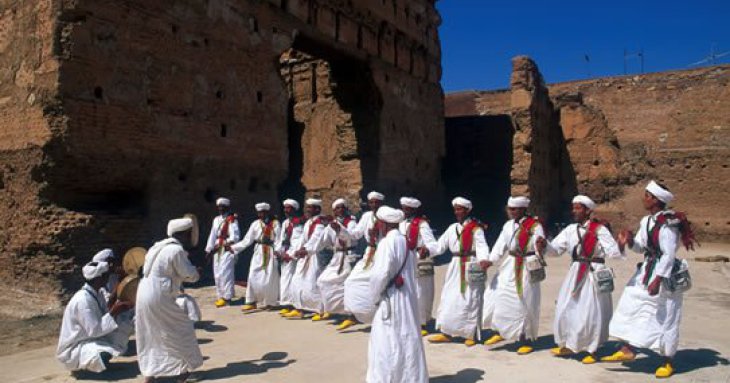
Moroccan music is not a single genre. It is a mosaic of rhythms, instruments, and traditions.
Each region has its own musical expressions, often linked to language, daily life, and local customs.
From the mountains of the Atlas to the imperial cities and coastal towns, Moroccan music carries a strong identity and reflects Morocco’s cultural heritage.
Amazigh Music: The Voice of Mountains and Villages
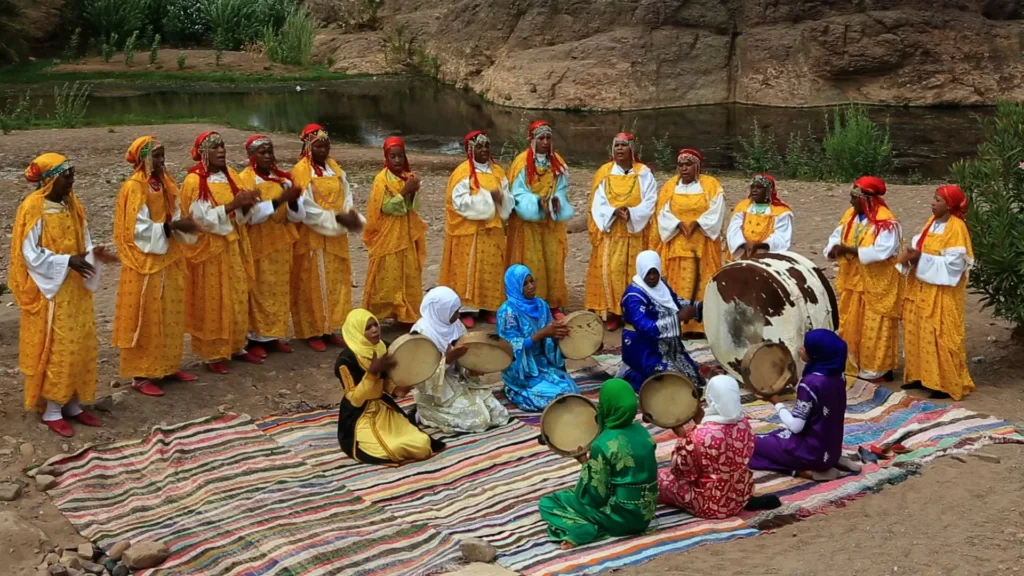
Amazigh music is among the oldest musical traditions in Morocco.
It is deeply rooted in regions such as the Rif, the Middle Atlas, and Souss.
It is expressed through:
- collective songs connected to rural life,
- poetry and chanting during weddings,
- traditional dances like Ahwach and Ahidous.
Through the Tamazight language and symbolic rhythms, Amazigh music preserves a living memory of ancestral traditions and community values.
Andalusian Heritage: Elegance and Refinement
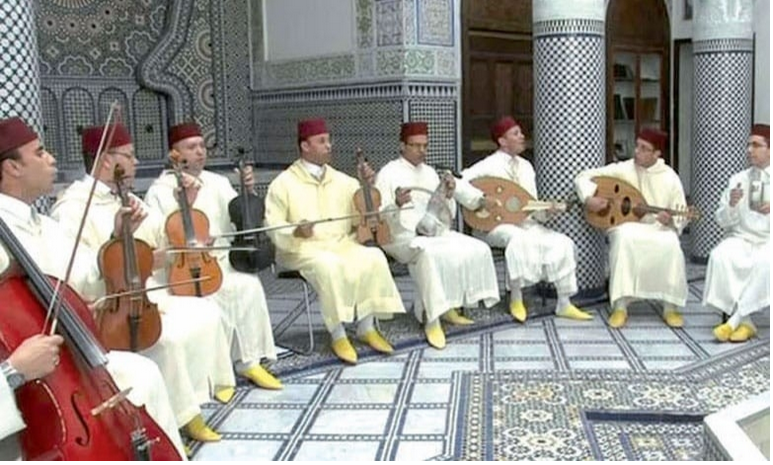
Andalusian music is considered one of Morocco’s most prestigious musical traditions.
Introduced after the fall of Al-Andalus, it flourished in historic cities such as Fez, Tetouan, Rabat, and Marrakech.
This genre is known for:
- refined melodies and structured compositions,
- classical instruments such as the oud and violin,
- poetic lyrics and a noble artistic style.
It represents a sophisticated part of Morocco’s cultural identity and remains a respected heritage passed down through generations.
African Rhythms: The Spiritual Soul of Gnawa Music
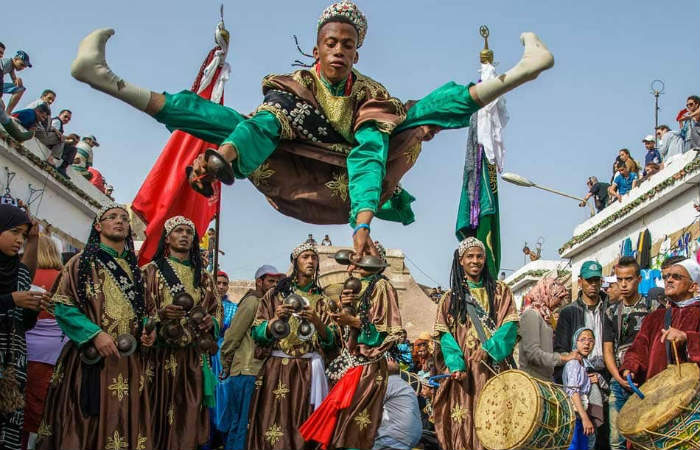
Among Morocco’s most internationally recognized musical traditions, Gnawa music holds a special place.
It reflects the cultural influence of Sub-Saharan African communities and spiritual practices in Morocco.
Gnawa music is characterized by:
- powerful and hypnotic rhythms,
- repeated chants with symbolic meaning,
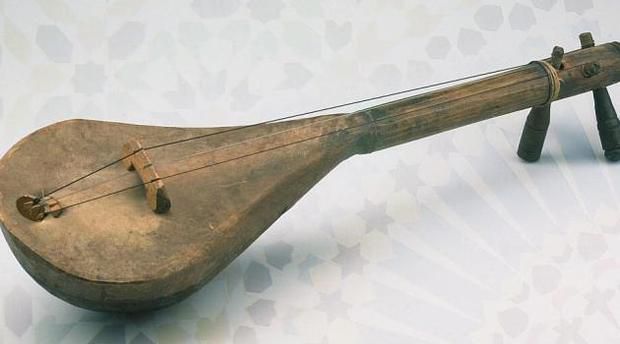
- traditional instruments like the guembri and qraqeb.
Often performed during ceremonies and cultural gatherings, Gnawa is both an artistic expression and a spiritual experience.
Chaabi, Aita, and Melhoun: The Music of the People
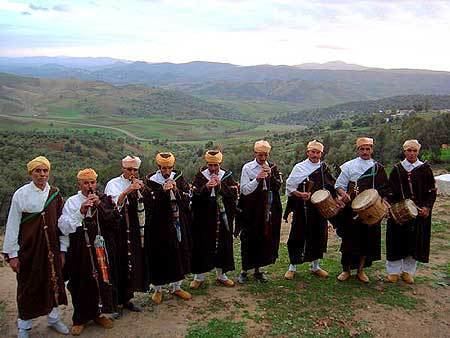
In everyday life, popular Moroccan music is strongly present in weddings, celebrations, and community events.
Chaabi: The festive sound of Morocco
Chaabi is cheerful, accessible, and widely played during Moroccan parties and family celebrations.
Aita: The memory of rural Morocco
Aita is a traditional vocal style known for powerful voices and lyrics that express love, pride, struggle, and rural life.
Melhoun: Poetry in musical form
Melhoun combines music and poetry, with rich verses that reflect Moroccan wisdom, traditions, and history.
These musical styles show how Moroccan music is also a collective language, shared and transmitted across generations.
Modern Creativity: When Tradition Inspires the Future
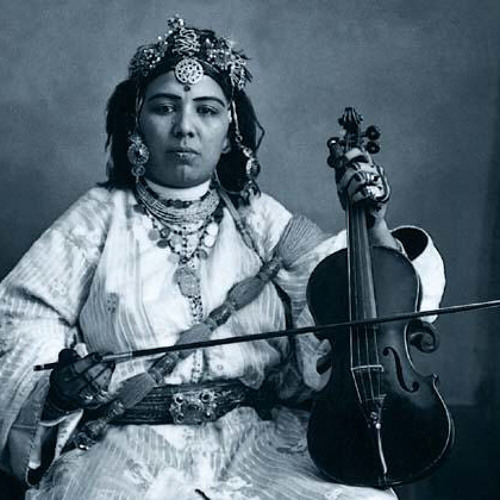
In recent years, Moroccan music has evolved with the modern world.
Many artists now blend traditional sounds with rap, pop, jazz, or electronic music.
Modern creativity does not erase tradition—it gives it new life.
This dynamic allows Moroccan music to stay connected to its roots while remaining open to global influences.
Conclusion
Moroccan music is a living cultural treasure.
It tells the story of Morocco’s identity, its diversity, and the cultural richness shaped by centuries of exchange.
Discover more about Moroccan culture through its traditions, arts, and heritage.
From Amazigh songs and Andalusian elegance to Gnawa rhythms and popular folk music, it reflects a unique heritage.
Morocco remains deeply attached to its traditions, while continuing to evolve toward the future.
FAQ – Moroccan Music
❓ What is Moroccan music?
Moroccan music is a rich blend of Amazigh, Arab, Andalusian and African influences, reflecting Morocco’s history, regional diversity and cultural identity.
❓ What are the main styles of Moroccan music?
Major styles include Gnawa, Andalusian music, Amazigh music, Chaabi, Aita, and Malhun, each rooted in specific regions and traditions.
❓ What instruments are used in Moroccan music?
Traditional instruments include the guembri, bendir, qanun, oud, krakebs, and rebab, shaping distinctive rhythms and sounds.
❓ Why is Moroccan music culturally important?
Moroccan music is a living heritage that accompanies ceremonies, festivals and daily life, preserving oral traditions and collective memory.
❓ Is Moroccan music still evolving today?
Yes. Contemporary Moroccan artists blend traditional rhythms with modern genres, keeping Moroccan music vibrant and relevant worldwide.
Moroccan music includes several traditions recognized internationally for their cultural value, with UNESCO highlighting forms such as Gnawa music as part of humanity’s intangible cultural heritage