Understanding Amazigh culture Morocco requires a journey back in time — far before the birth of modern nation-states, when North Africa was home to one of humanity’s oldest continuous civilizations.
🇲🇦 Inspired by Amazigh culture?
Discover our decor pieces with authentic Amazigh motifs ✨
Tifinagh mugs, Berber geometric patterns and more 🌍
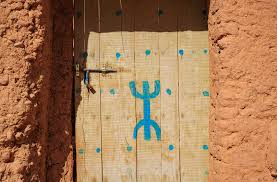
Long before Phoenicians sailed the Mediterranean, before Romans built their cities, before Arab caravans crossed the Sahara, the Amazigh people were already shaping the land we now call Morocco. They are the indigenous inhabitants of North Africa — a people whose name, Imazighen, means simply “free people.”
Today, Amazigh culture in Morocco is not a museum piece or a distant memory. It lives in the geometric tattoos on grandmothers’ hands, in the haunting melodies of mountain flutes, in the silver jewelry worn by Rif brides, in the tagines simmering over charcoal from the Atlas to the Sahara. It speaks through Tamazight, an official language of Morocco since 2011, and paints itself on doorways through ancient symbols passed down for millennia. This resilience is the defining feature of Amazigh culture Morocco has nurtured for over ten millennia.
This complete guide explores the soul of Amazigh culture: its origins, language, traditions, crafts, cuisine, music, and where you can experience it authentically if you visit Morocco. Whether you are planning a trip to the Atlas Mountains, curious about Berber heritage, or simply fascinated by one of the world’s oldest living cultures, you will find here the essential knowledge — woven with the care of a Beni Ourain carpet, where every thread tells a story.
Who Are the Amazigh People? Origins and History
The Amazigh, widely known in English as Berbers, are the original inhabitants of North Africa. Archaeological evidence places their presence in the region for at least 10,000 years, making them one of the oldest continuously present peoples in the world. Their ancestral lands stretch from the Canary Islands in the Atlantic to the Siwa Oasis in Egypt, with Morocco remaining the country where Amazigh culture is most vibrantly preserved.
The word “Berber” itself comes from the Greek “barbaros,” meaning foreigner — a name imposed by outsiders. The Amazigh reject this term, preferring Imazighen (plural) or Amazigh (singular), which translates to “free men” or “noble people.” This choice of self-naming reveals everything about their identity: a people who, through centuries of invasions by Phoenicians, Romans, Vandals, Byzantines, and Arabs, never lost their soul.
A People of the Mountains and the Desert
Three main Amazigh groups live in Morocco today: the Rifians in the northern Rif mountains, the Middle Atlas Amazigh across the central ranges, and the Chleuhs (Tachelhit speakers) in the Souss Valley and High Atlas. Each group preserves distinct dialects, musical traditions, and crafts — yet all share a common civilizational thread that predates written history. For travelers who want to understand Morocco beyond the imperial cities, learning about the Amazigh is essential reading.
Scholars interested in exploring this fascinating history in depth can find excellent academic resources such as The Berbers (The Peoples of Africa) by Michael Brett and Elizabeth Fentress, widely considered the definitive English-language reference on Amazigh civilization.
The Tamazight Language: A Living Ancient Voice
Tamazight is not one language but a family of related dialects spoken by millions across North Africa. In Morocco alone, three main varieties coexist: Tarifit (Rif), Tamazight (Middle Atlas), and Tachelhit (South). While they share a common structure, speakers from different regions often need a few days of exposure to understand each other fluently.
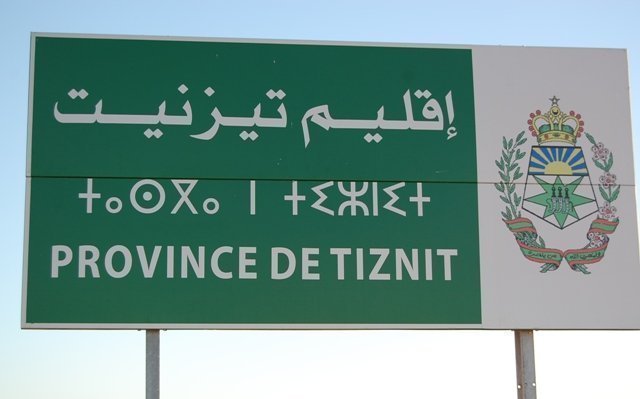
In 2011, following decades of cultural activism, Tamazight became an official language of Morocco alongside Arabic — a historic recognition enshrined in the new constitution. Today, you can see Tamazight on road signs, on government buildings, and in schools, written in its ancient Tifinagh alphabet. This script, with its distinctive geometric letters, has been used by Amazigh peoples for over 2,500 years.
📚 To go further, classic references on Amazigh history include works by Michael Brett, Elizabeth Fentress, and Ibn Khaldoun’s foundational Histoire des Berbères.
The Tifinagh Alphabet: Writing Older Than Rome
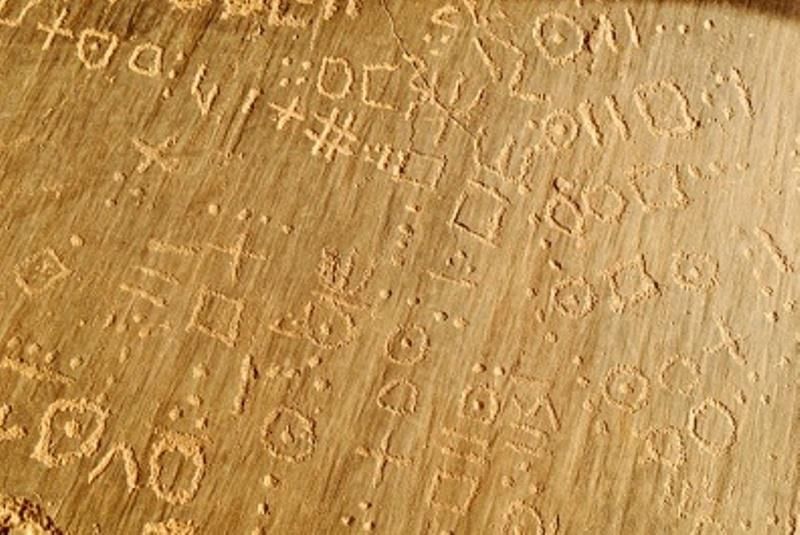
Tifinagh is one of the oldest writing systems still in active use today. Ancient inscriptions in proto-Tifinagh have been found across North Africa, dating back to the 3rd century BCE. Modern Tifinagh (Neo-Tifinagh) was standardized in the 1970s and officially adopted by Morocco in 2003. Each letter has its own symbolic meaning, and the script reads left to right, unlike Arabic.
If you want to explore the Tifinagh script and Amazigh language in depth, resources like The Libyco-Berber Alphabet and the Amazigh Language by Mazigh Belkasim offer a comprehensive and accessible introduction for beginners and curious learners alike.
Amazigh Symbols and Their Sacred Meanings
Walk through any Amazigh village in Morocco and you will see them everywhere: carved into wooden doors, painted on pottery, tattooed on women’s faces, woven into carpets, stamped on silver jewelry. Amazigh symbols are more than decoration — they form an ancient visual language that speaks of protection, fertility, identity, and the cycles of life.
The Most Iconic Amazigh Symbols
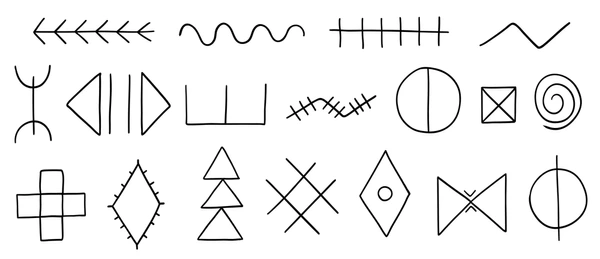
Among the most widely recognized is the Yaz (ⵣ), the central letter of Tifinagh that today serves as the universal symbol of Amazigh identity. Painted in red, green, and yellow on flags across North Africa, it represents the “free man.” Other essential symbols include the khamsa (hand of Fatima) for protection against the evil eye, the fish for fertility, the lozenge for the feminine principle, and the eight-pointed star representing cosmic order.
Amazigh Tattoos: A Vanishing Art
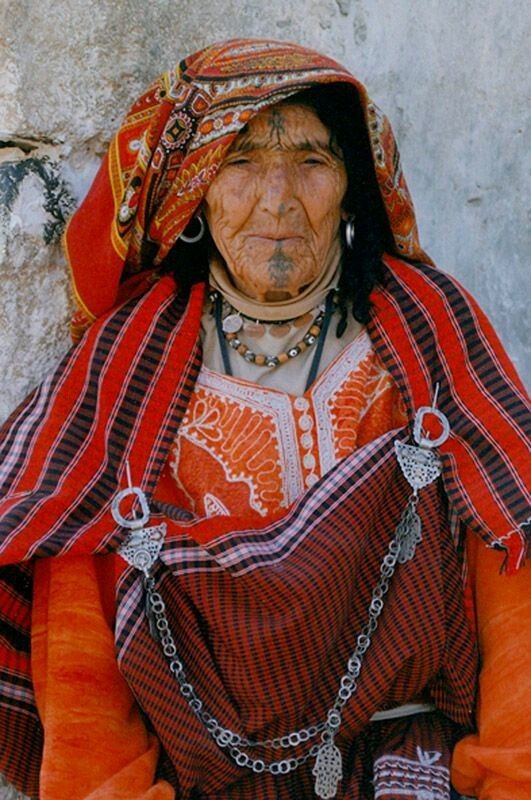
For centuries, Amazigh women wore tattoos on their faces, hands, and ankles — each design carrying specific meanings tied to their tribe, marital status, and spiritual beliefs. Today, this practice has nearly disappeared among younger generations, though elderly Amazigh women in remote villages still carry these markings as living archives of a fading art. Researchers and artists have documented these designs extensively in recent decades.
For those fascinated by the visual richness of Amazigh culture, books like Amazigh Arts in Morocco by Cynthia Becker offer stunning photographic documentation of symbols, tattoos, and traditional ornamentation that scholars consider definitive.
Traditional Amazigh Crafts & Silver Jewelry
Amazigh craftsmanship is where centuries of tradition become tangible. Every hand-woven carpet, every piece of hammered silver, every molded clay pot carries the memory of the artisan who made it — and the grandmother who taught them. These are not souvenirs. They are living heritage, crafted by techniques unchanged for generations.
Beni Ourain Carpets: The Rugs That Conquered the World
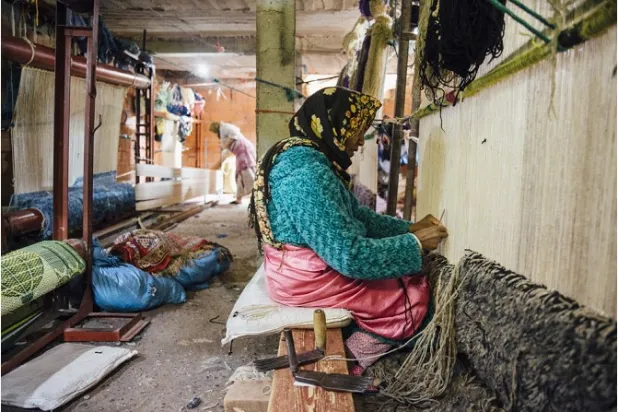
Perhaps no Amazigh craft has gained more international fame than the Beni Ourain carpet. Woven by women of the Beni Ourain tribes in the Middle Atlas, these cream-colored rugs with minimalist black geometric patterns have become icons of modern interior design, coveted by architects and decorators worldwide. Each rug tells a personal story through its symbols — a birth, a wedding, a season of drought.
🇲🇦 Bring Amazigh heritage home
Tifinagh symbol mugs, Berber pattern designs
Worldwide shipping 🌍
Amazigh Silver Jewelry: Worn Stories
Amazigh women’s jewelry is not merely ornamental — it is wearable history. The heavy silver fibulas, elaborate necklaces, and intricate headdresses passed from mother to daughter signify wealth, marital status, tribal affiliation, and protection. The most celebrated jewelry comes from the Tiznit and Taroudant regions in southern Morocco, where master silversmiths still practice ancient techniques of engraving, filigree, and niello inlay.
Pottery, Weaving, and Leatherwork
Beyond carpets and jewelry, Amazigh artisans produce exceptional pottery (particularly in the Rif region), intricate leatherwork, and hand-woven textiles. Each village often specializes in a particular craft, creating a mosaic of artisanal traditions across Morocco’s rural landscape.
For readers who want to bring a piece of Amazigh heritage into their home, authentic items like Beni Ourain handwoven rugs, traditional Amazigh silver bracelets, or khamsa pendants can be found through specialty retailers, though nothing compares to purchasing directly from artisans in Morocco’s mountain villages.
Amazigh Cuisine and the Liquid Gold of the Atlas
The food of Amazigh culture Morocco is the foundation of what the world now celebrates as Moroccan cuisine. Many iconic dishes — couscous, tagine, amlou, rfissa — originated in Amazigh kitchens long before they spread to the imperial cities. Cooked slowly over charcoal, seasoned with saffron, cumin, and ras el hanout, these dishes reflect the Amazigh philosophy of food as an act of love and hospitality.
Argan Oil: The Liquid Gold of Morocco
Perhaps the most famous gift of Amazigh culture to the world is argan oil — produced from the fruit of the argan tree, which grows exclusively in southwestern Morocco. For centuries, Amazigh women have cracked the hard argan nuts by hand, ground the kernels between stones, and extracted the precious oil through slow, patient labor. Today, women’s cooperatives across the Souss region preserve this tradition while bringing economic empowerment to thousands of families. Argan oil is prized globally for both culinary use and skincare.
Amlou: The Amazigh Superfood
Amlou is a traditional Amazigh breakfast spread made from roasted almonds, argan oil, and honey. Rich in healthy fats and protein, it is often called “Moroccan Nutella” — though the comparison barely does justice to this ancient superfood, which has sustained Amazigh families through harsh winters for centuries.
Authentic pure argan oil from women’s cooperatives is available online, along with excellent Moroccan cookbooks that feature traditional Amazigh recipes like the iconic Berber tagine and seven-vegetable couscous.
Amazigh Culture Morocco: Music, Dance, and Festivals
Amazigh music is the rhythmic heartbeat of Morocco’s mountains and deserts. From the hypnotic Ahidous dance of the Middle Atlas to the martial Ahwash of the High Atlas, from the haunting Rif ballads to the celebratory Rways poetry of the Souss, each region has developed its own musical language — all sharing the same roots of oral poetry, collective dance, and ancestral rhythm.
Yennayer: The Amazigh New Year
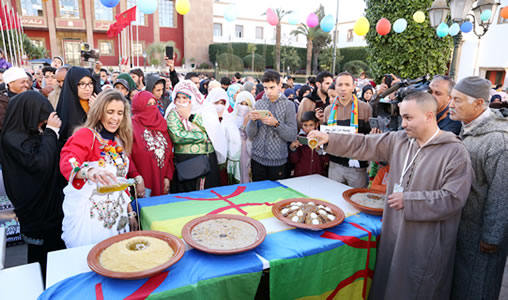
Every January 13th, Amazigh communities across Morocco celebrate Yennayer — the Amazigh New Year, which marks the year 2975 in the Amazigh calendar (2025 in the Gregorian). Families gather around abundant tables featuring seven-ingredient couscous, tagoula (barley porridge), and traditional sweets. Yennayer became an official public holiday in Morocco in 2024, reflecting the growing institutional recognition of Amazigh heritage.
Major Amazigh Festivals in Morocco
Several annual festivals celebrate Amazigh culture across Morocco: the Imilchil Moussem in September (the famous “marriage festival” in the Atlas), the Timitar Festival in Agadir (July, celebrating Amazigh music), and the National Festival of Ahwash in Ouarzazate (traditional mountain dance). Each offers travelers an authentic immersion into living Amazigh traditions.
Where to Experience Amazigh Culture Morocco (Best Regions)
For travelers seeking authentic Amazigh experiences, Morocco offers extraordinary opportunities — but not in the usual tourist cities. To meet Amazigh culture at its most vibrant, you must venture beyond Marrakech and Fez into the mountains and deserts where Amazigh communities have lived for millennia.
The Atlas Mountains: The Heart of Amazigh Morocco
The High Atlas and Middle Atlas ranges are where Amazigh culture feels most alive. Villages like Imlil, Aroumd, and Ait Bougmez offer homestays with Amazigh families, where you can share meals, learn traditional crafts, and witness daily life unchanged for centuries. Hiking in these regions is not just scenic — it is a cultural encounter with every tea shared in a family home.
Chefchaouen and the Rif Mountains
The famous blue city of Chefchaouen sits in the heart of Amazigh Rif country. Beyond its photogenic streets, the surrounding Rif mountains are home to proud Rifian Amazigh communities with their own dialect, music, and traditions. A day trip to nearby villages like Akchour reveals a side of Morocco few tourists ever see.
The Souss Valley and Tafraout
In southern Morocco, the Souss Valley and the town of Tafraout are strongholds of Chleuh Amazigh culture. Here you can visit argan oil cooperatives, admire the pink granite landscapes dotted with ancient painted rocks, and experience the warmth of Amazigh hospitality at its finest.
Essaouira: Amazigh and Gnawa Heritage
The coastal city of Essaouira offers a unique blend of Amazigh and Gnawa cultural heritage. Every June, the Gnaoua World Music Festival transforms the city into a celebration of African-Moroccan musical traditions that attract visitors from around the world.
Frequently Asked Questions About Amazigh Culture
What is the difference between Amazigh and Berber?
“Berber” is the English term derived from Greek “barbaros” (foreigner), traditionally used by outsiders. “Amazigh” (plural: Imazighen) is the name the people use for themselves, meaning “free people.” Today, “Amazigh” is the preferred term, both academically and politically, as it reflects self-identification rather than an externally imposed label.
How many Amazigh people live in Morocco?
Estimates vary, but approximately 40% of Morocco’s population (around 14-15 million people) identify as Amazigh or speak a Tamazight dialect as their first language. This makes Morocco the country with the largest Amazigh population in the world.
Is Tamazight difficult to learn?
For English speakers, Tamazight presents some challenges — particularly its guttural sounds and complex verb system. However, it uses a relatively logical grammar and the Tifinagh alphabet, while unfamiliar, has only 33 letters and can be learned in a few days. Basic greetings and hospitality phrases are highly appreciated by Amazigh speakers.
What is Yennayer and when is it celebrated?
Yennayer is the Amazigh New Year, celebrated every January 13th. It marks the beginning of the agricultural year and commemorates the ancient Amazigh calendar, which currently (2026) corresponds to the year 2976. Since 2024, Yennayer has been an official public holiday in Morocco.
Can tourists visit Amazigh villages?
Yes, absolutely. Amazigh culture Morocco welcomes respectful visitors, and a growing network of homestays, cultural cooperatives, and community-based tourism initiatives make authentic experiences accessible. The High Atlas, Ait Bougmez Valley, and Tafraout region are particularly well-organized for cultural tourism.
What should I buy as authentic Amazigh souvenirs?
The most authentic Amazigh products include hand-woven carpets (especially Beni Ourain), silver jewelry (from Tiznit), argan oil from women’s cooperatives, pottery, leather goods, and traditional textiles. Buying directly from artisan cooperatives ensures authenticity and supports local communities.
Is Amazigh culture still threatened?
While Amazigh culture Morocco has gained significant recognition in recent decades — including constitutional status for Tamazight and official Yennayer celebrations — certain traditions remain endangered. Facial tattoos, some dialects, and specific craft techniques are being lost as younger generations move to cities. UNESCO has recognized the Taskiwin dance as requiring urgent safeguarding.
What is the Amazigh flag?
The Amazigh flag consists of three horizontal bands: blue (Mediterranean Sea), green (mountains and fertile lands), and yellow
(Sahara desert). In the center appears the Yaz (ⵣ) in red, symbolizing the blood of the Amazigh people and their fight for freedom. It is one of the most powerful symbols of Amazigh culture Morocco shares with North Africa.
Conclusion: A Living Heritage for a Connected World
Amazigh culture Morocco is not a relic of the past — it is a vibrant, evolving identity that continues to shape the country and inspire the world. From the geometric patterns of Beni Ourain rugs conquering modern interior design, to argan oil becoming a global beauty staple, to Amazigh music captivating international audiences, this ancient civilization proves that heritage and modernity are not opposites but partners.
For those who visit Morocco, encountering Amazigh culture is not optional — it is essential. For those who cannot travel, engaging with Amazigh books, crafts, music, and cuisine offers a window into one of humanity’s oldest living cultures. Every carpet bought from an artisan, every bottle of cooperative-produced argan oil, every book on Tamazight contributes to the continuity of this extraordinary heritage.
Explore more of our guides on Moroccan Traditions, Moroccan Handicrafts, and Moroccan Music to deepen your journey into Morocco’s cultural soul.
For further scholarly reference, the Amazigh people have shaped the history, language and traditions of North Africa, as explained by Encyclopædia Britannica in its overview of the Amazigh (Berber) people.