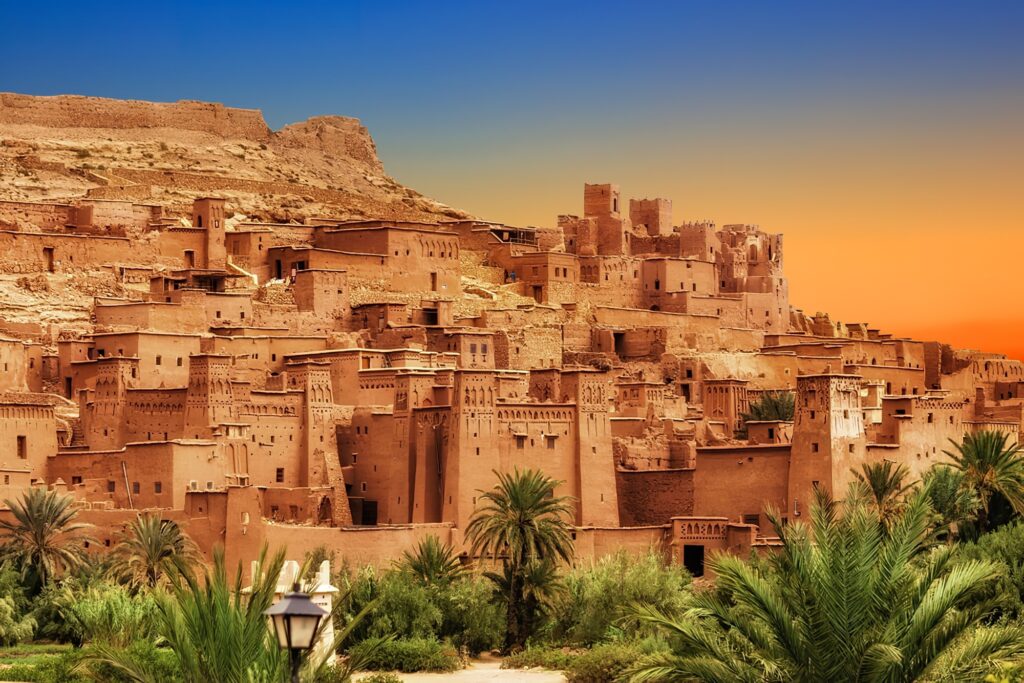
Aït Ben Haddou Ksar, a symbol of Moroccan heritage and traditional architecture
Moroccan heritage is one of the richest and most diverse in the world. It reflects a millennia-old history shaped by the meeting of multiple civilizations.
Amazigh, Arab, Andalusian, and African influences have profoundly shaped Morocco’s cultural identity, visible in its monuments, living traditions, and ancestral craftsmanship.
Among the most iconic symbols of this heritage is the Ksar of Aït Ben Haddou, a remarkable example of traditional earthen architecture and a UNESCO World Heritage Site.
Moroccan heritage includes in particular:
- UNESCO-listed imperial cities
- Historic ksour and kasbahs
- Ancestral cultural traditions
- Traditional craftsmanship recognized worldwide
A Remarkable Historical and Architectural Heritage
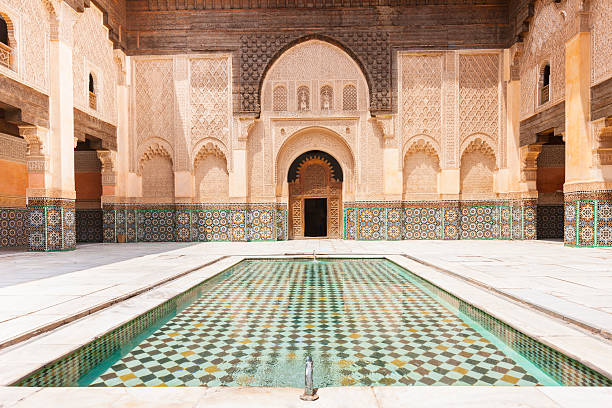
Traditional Moroccan architecture in a historic medina
Traditional Moroccan architecture is distinguished by a harmonious balance between beauty, symbolism, and functionality. It is based on the use of noble local materials such as carved wood, sculpted plaster, cut stone, and the famous zellige mosaics.
Geometric patterns and decorative motifs are inspired by Islamic and Amazigh art, expressing a deep sense of balance and spirituality.
This architectural heritage represents a fundamental pillar of Moroccan cultural identity and can be found in:
- historic medinas
- traditional mosques
- palaces and Moroccan riads
The Ksar of Aït Ben Haddou, listed as a UNESCO World Heritage Site, stands as a major symbol of earthen architecture and the cultural heritage of southern Morocco.
Intangible cultural heritage of Morocco
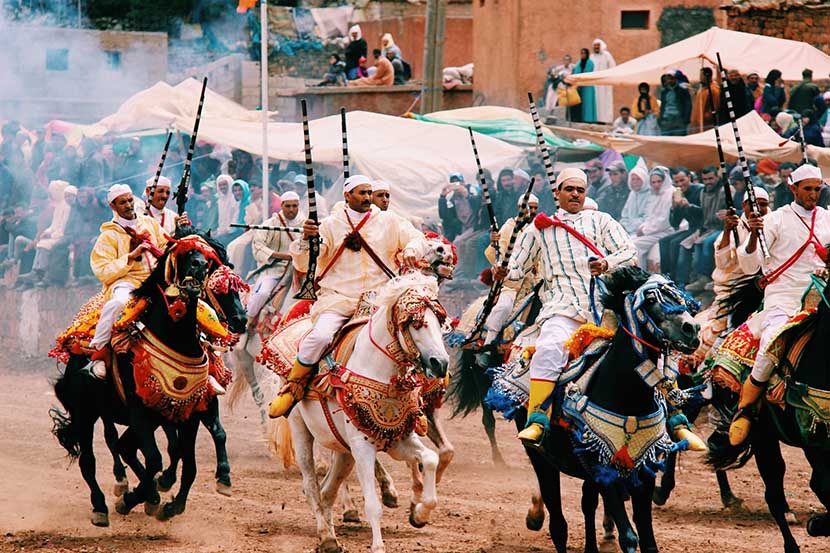
Moroccan fantasia, an equestrian tradition and intangible cultural heritage
Beyond monuments, Moroccan heritage also includes a rich and diverse intangible cultural heritage. It encompasses oral traditions, popular music, dances, social rituals, and traditional festivals.
These cultural practices, passed down from generation to generation, play a vital role in preserving Moroccan identity.
Moroccan intangible heritage includes in particular:
- the fantasia, an emblematic equestrian tradition
- regional traditional music
- moussems and popular festivals
- ancestral social practices and know-how
Moroccan Handicrafts: Ancestral Know-How
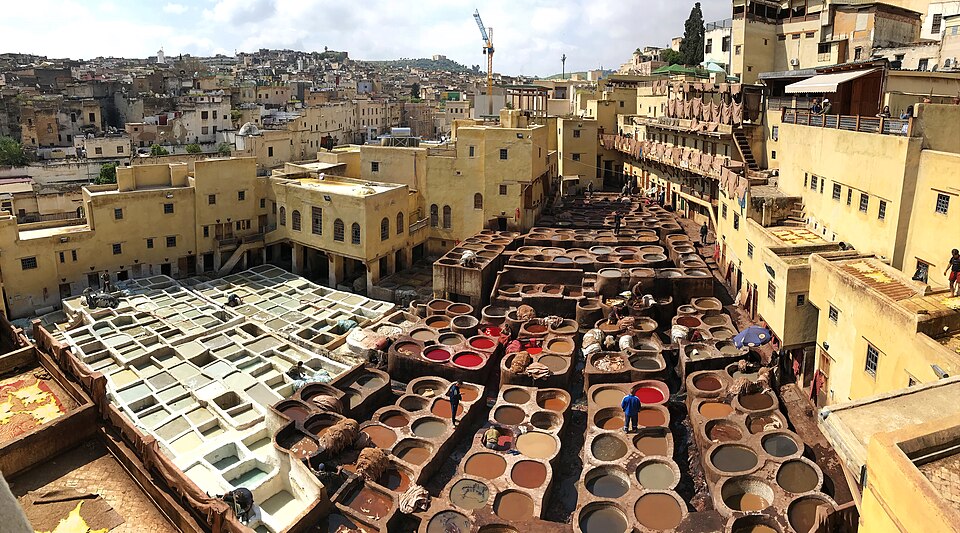
Traditional Moroccan craftsmanship in the tanneries of Fez
Moroccan handicrafts form one of the key pillars of the country’s cultural heritage. They include traditional crafts passed down through generations, reflecting remarkable technical mastery and a deep attachment to tradition.
Notable examples include:
- pottery and ceramics
- weaving and traditional carpets
- leatherwork and leather goods
- jewelry making and artistic woodwork
Cities such as Fès remain living centers of Moroccan craftsmanship, where traditional skills continue to shape local economic and cultural life.
A living heritage to preserve
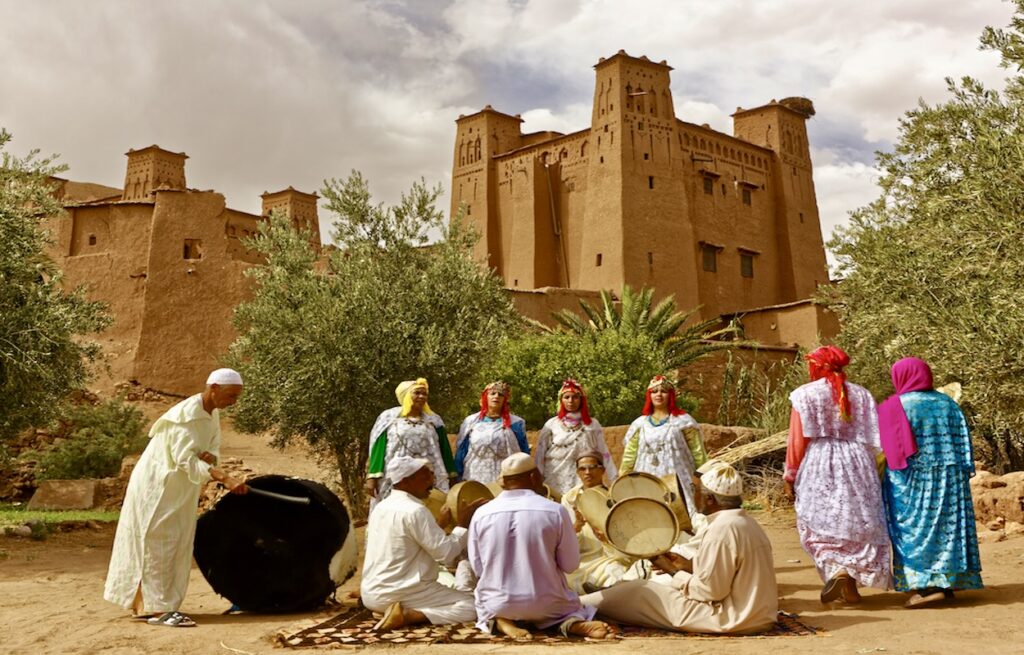
Moroccan traditions and living heritage in rural villages
Moroccan heritage is not frozen in the past. It remains alive and constantly evolving, influencing contemporary architecture, gastronomy, lifestyles, and cultural practices.
Preserving this heritage—both tangible and intangible—means protecting Morocco’s cultural identity and passing on a precious legacy to future generations.
Its promotion also contributes to the cultural influence of Morocco at both national and international levels.
Discover Moroccan heritage through its historic monuments
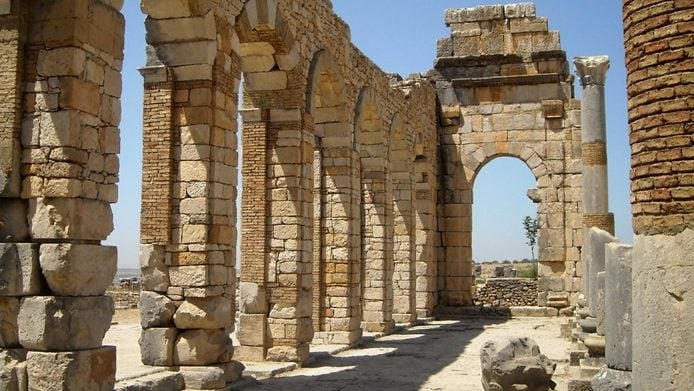
Ancient ruins, witnesses of Moroccan heritage and millennia-old history
Moroccan heritage is deeply rooted in the history of Morocco and inseparable from its living traditions.
It reflects the country’s cultural identity and represents a precious legacy shaped over centuries.
Its richness and diversity make Morocco a land of history, living traditions, and exceptional cultural heritage to discover, preserve, and pass on to future generations.
Moroccan heritage is deeply rooted in the history of Morocco, closely connected to Moroccan culture, and inseparable from the living traditions that have shaped the country’s identity over centuries.
Moroccan Heritage – FAQ
What is Moroccan heritage?
Moroccan heritage refers to the cultural, historical, and artistic legacy shaped over centuries by Amazigh, Arab, Andalusian, African, and Mediterranean civilizations. It includes monuments, traditions, craftsmanship, architecture, and intangible cultural practices that define Morocco’s identity.
What are the most important symbols of Moroccan heritage?
Key symbols of Moroccan heritage include historic medinas, imperial cities, ksour and kasbahs such as Aït Ben Haddou, traditional Moroccan architecture, and ancestral crafts like pottery, weaving, and leatherwork.
Why is Aït Ben Haddou important to Moroccan heritage?
The Ksar of Aït Ben Haddou is a major symbol of Moroccan heritage because it represents traditional earthen architecture and the historical way of life in southern Morocco. It is recognized as a UNESCO World Heritage Site for its cultural and architectural significance.
What is intangible cultural heritage in Morocco?
Intangible cultural heritage in Morocco includes living traditions such as music, dances, oral traditions, social rituals, festivals, and equestrian practices like fantasia (tbourida). These traditions are passed down through generations and remain an essential part of Moroccan identity.
How does traditional architecture reflect Moroccan heritage?
Traditional Moroccan architecture reflects heritage through the use of local materials, geometric patterns, zellige mosaics, carved wood, and symbolic design. It expresses a balance between spirituality, functionality, and aesthetic harmony found in medinas, mosques, palaces, and riads.
Why are Moroccan handicrafts considered part of national heritage?
Moroccan handicrafts are considered a pillar of national heritage because they preserve ancestral know-how and cultural memory. Crafts such as pottery, leatherwork, weaving, and jewelry making reflect regional identities and centuries-old techniques still practiced today.
Is Moroccan heritage still alive today?
Yes, Moroccan heritage is a living heritage. It continues to evolve and influence modern architecture, gastronomy, music, and daily life while remaining deeply rooted in historical traditions and cultural values.
Why is preserving Moroccan heritage important?
Preserving Moroccan heritage helps protect cultural identity, transmit knowledge to future generations, and promote Morocco’s cultural influence worldwide. It also supports sustainable tourism and local craftsmanship.
How is Moroccan heritage linked to Moroccan culture?
Moroccan heritage and Moroccan culture are inseparable. Heritage represents the historical foundations, while culture reflects how these traditions continue to be lived, practiced, and adapted in everyday Moroccan life.
To learn more about Morocco’s officially recognized heritage sites, visit UNESCO’s World Heritage Centre.