
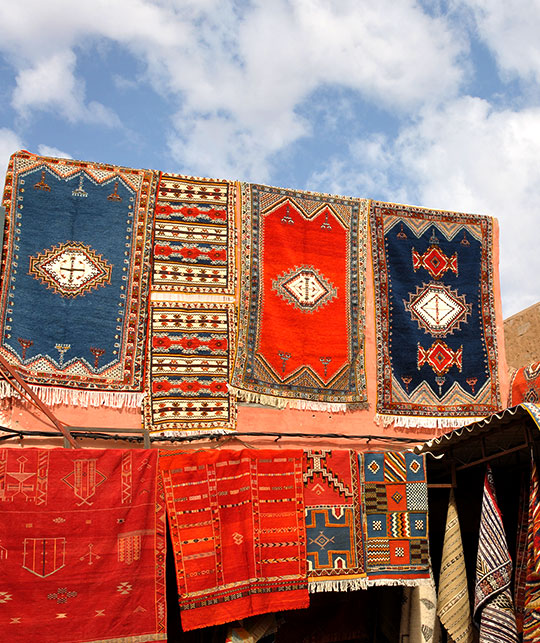
Moroccan handicrafts play a central role in Morocco’s culture and identity. As a living heritage passed down from generation to generation, they represent one of the fundamental pillars of Moroccan heritage, alongside historic monuments and cultural traditions.
Through their shapes, materials, and techniques, Moroccan handicrafts reflect a millennia-old history shaped by Amazigh, Arab, Andalusian, and African influences.
An Ancestral Craft Passed Down Through Generations
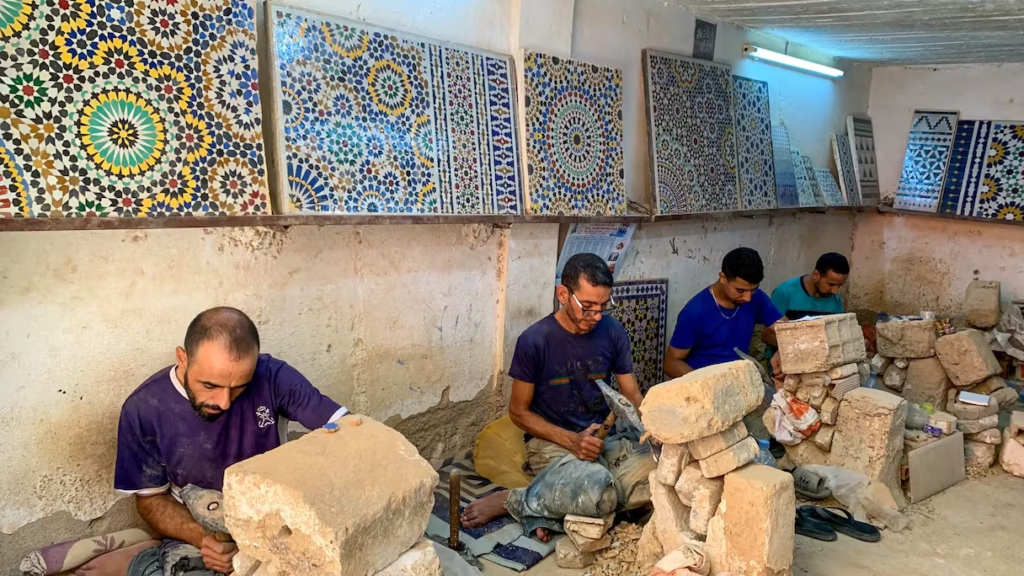
The transmission of these skills involves observation, repeated practice, and knowledge of materials. A potter learns how clay responds to shaping and firing; a weaver works with fibres, tension and pattern; a zellige craftsperson combines cutting and assembly. Tools evolve, but understanding each production stage helps explain what makes an object distinct from an industrial imitation.
These crafts form an essential part of Morocco’s cultural heritage, contributing to the transmission of values, symbols, and local identities across generations.
👉 To better understand the broader cultural context, discover our page dedicated to Moroccan heritage.
The Major Trades of Moroccan Handicrafts
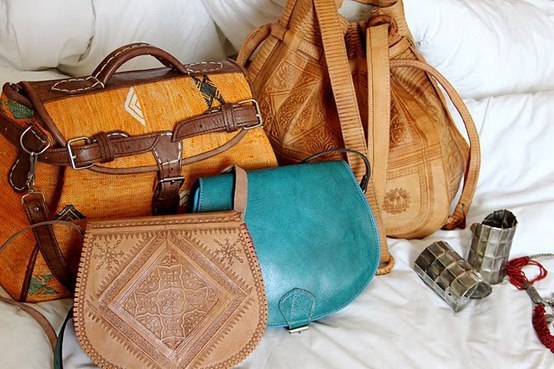
Moroccan handicrafts encompass a wide variety of traditional crafts, including:
- Pottery and ceramics, decorated with geometric and floral patterns
- Weaving and Moroccan carpets, rich in Amazigh symbolism
- Leatherwork and leather goods, crafted using ancestral methods
- Traditional jewelry, reflecting regional identities
- Wood carving and artistic carpentry
- Zellige mosaic work, an emblem of Moroccan architecture
Each region of Morocco has its own specialties, contributing to the exceptional diversity of Moroccan handicrafts.
Iconic Cities of Moroccan Handicrafts
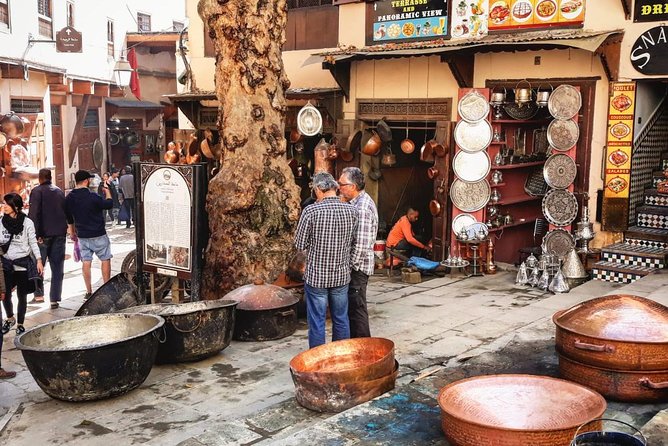
Certain historic cities play a key role in preserving and transmitting Moroccan craftsmanship. Among them, Fes stands out as a major center of traditional handicrafts. Its tanneries, workshops, and souks bear witness to skills that remain alive today.
Other cities such as Marrakech, Meknes, Essaouira, and Tetouan also contribute to the national and international influence of Moroccan handicrafts.
Four Regional Examples: Materials, Skills, and Workshops
Moroccan craftsmanship is not a single style. The techniques and products differ by region, and some trades are practiced in several cities. Looking at the material and production method explains more than a generic “handmade in Morocco” label.
- Fes — ceramic decoration and leatherwork: potters shape and fire clay before applying finishes; zellige specialists cut small glazed ceramic pieces and assemble them into geometric compositions. Leatherworkers prepare and finish hides for goods such as bags and slippers.
- Safi — pottery: the city is known for ceramic workshops where shaping, drying, firing, and decorating are separate skills. A decorative ceramic object should not automatically be assumed suitable for cooking or serving food.
- Essaouira — thuya wood and marquetry: artisans carve, turn, and inlay wood to make boxes and furnishings. Wood grain, construction, and finishing are important when assessing a piece.
- Taznakht — weaving: carpet makers use wool, weaving knowledge, and locally developed designs. The Moroccan Ministry of Handicrafts documents facilities supporting local carpet production and training, including women’s cooperatives.
The Moroccan National Tourist Office provides an overview of crafts by region, while the Ministry’s Taznakht craft centre documents support for carpet-making and other trades.
Moroccan Handicrafts as a Pillar of Moroccan Heritage
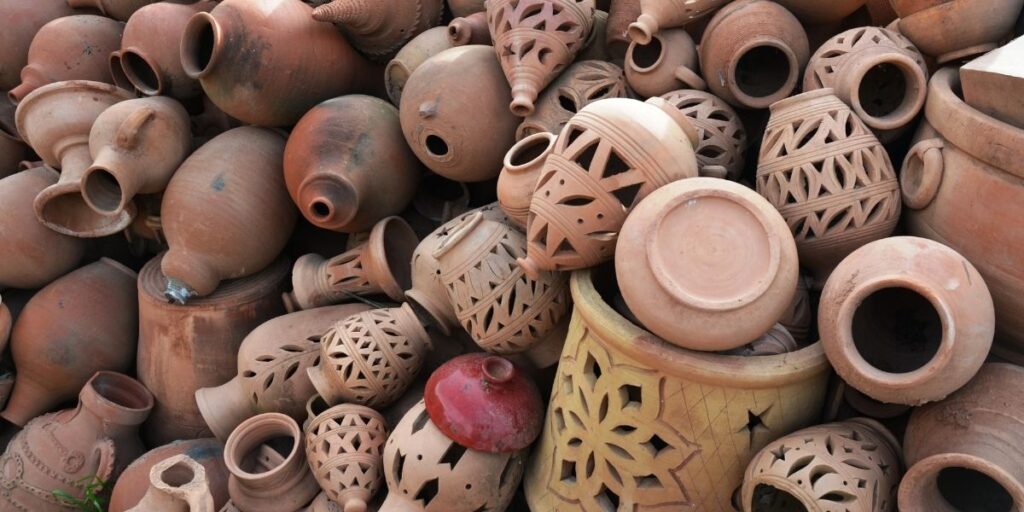
Moroccan handicrafts are not limited to decorative objects. They are closely linked to everyday life, housing, social practices, and cultural traditions.
As a living heritage, Moroccan handicrafts fully contribute to the richness of Moroccan heritage, alongside traditional architecture, popular festivals, and intangible cultural expressions.
👉 Moroccan handicrafts are an integral part of Moroccan heritage, a true reflection of the country’s cultural identity.
How to Tell Handmade Craftwork from Mass-Produced Decor
A souvenir decorated with Moroccan motifs is not necessarily made by a Moroccan artisan. If you are visiting a workshop, comparing products online, or buying from a cooperative, these questions can help you make a more informed choice:
- Which material is used? Ask whether a rug is made from wool or synthetic fibres, whether a vessel is fired ceramic, and whether a box is solid wood or veneered.
- What process was used? Handwoven, hand-carved, moulded, printed, and machine-made objects can all look attractive, but represent different techniques.
- Who made it? Look for a workshop name, artisan, cooperative, or verifiable place of production rather than inferring origin from the pattern.
- How will it be used? Before using a ceramic item for food, confirm that its materials and glaze are suitable for food contact. Ask how to clean textiles and protect wood.
- Is the description accurate? “Traditional design,” “vintage,” and “handmade” are different claims. A new hand-crafted object is not automatically an antique.
These questions are particularly helpful when evaluating regional carpets, silver jewellery, zellige-inspired decorations, or pottery. They make it easier to appreciate the work without relying on unverified stories about a design’s age or meaning.
Preserving and Promoting Moroccan Handicrafts
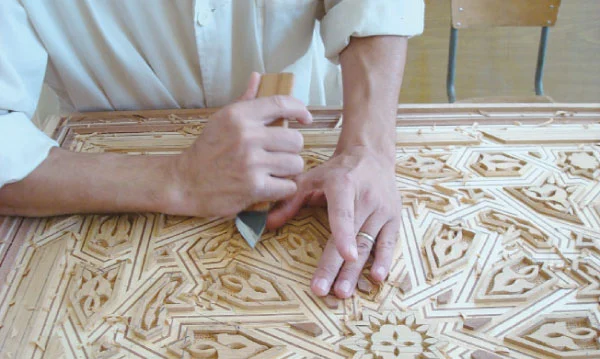
In the face of modern challenges and industrial production, preserving Moroccan handicrafts is essential. Promoting this living heritage helps to:
- protect unique traditional skills
- support local artisans and communities
- transmit knowledge to future generations
- strengthen Morocco’s cultural influence worldwide
Many initiatives today seek to combine tradition and innovation while respecting the authenticity of Moroccan craftsmanship.
FAQ – Moroccan Handicrafts
❓ What are Moroccan handicrafts?
Moroccan handicrafts refer to traditional crafts created by skilled artisans using ancestral techniques passed down through generations. They include pottery, weaving, leatherwork, metalwork and wood carving.
❓ Why are Moroccan handicrafts important?
Moroccan handicrafts represent a living cultural heritage, reflecting regional identities, history and artistic expression. They play a key role in preserving Morocco’s cultural traditions.
❓ What are the most famous Moroccan crafts?
Some of the most well-known Moroccan crafts include zellige tilework, Berber carpets, leather tanning, traditional ceramics, and handcrafted jewelry.
❓ Are Moroccan handicrafts still made today?
Yes, Moroccan handicrafts are still actively produced today in cities and regions such as Fez, Marrakech, Tétouan and the Atlas Mountains, combining tradition with modern creativity.
❓ How do Moroccan handicrafts reflect cultural identity?
Through symbols, colors and materials, Moroccan handicrafts express spiritual beliefs, regional heritage and social values deeply rooted in Moroccan culture.
Some specific Moroccan skills and practices are inscribed on UNESCO’s intangible cultural heritage lists. Morocco is associated with the 2023 inscription for metal engraving practices, while Moroccan caftan art, traditions and skills were inscribed in 2025. These inscriptions recognize particular living practices, not every Moroccan craft, workshop, or product individually.
Conclusion
Moroccan handicrafts represent far more than a collection of manual trades. They are the expression of a rich culture, a long history, and a living heritage deeply rooted in Morocco’s identity.
Closely linked to Moroccan heritage, they deserve to be preserved, valued, and passed on as a precious legacy for future generations.
Further inspiration: discover downloadable digital designs inspired by traditional Moroccan patterns in our MaisonBladi Etsy shop.