
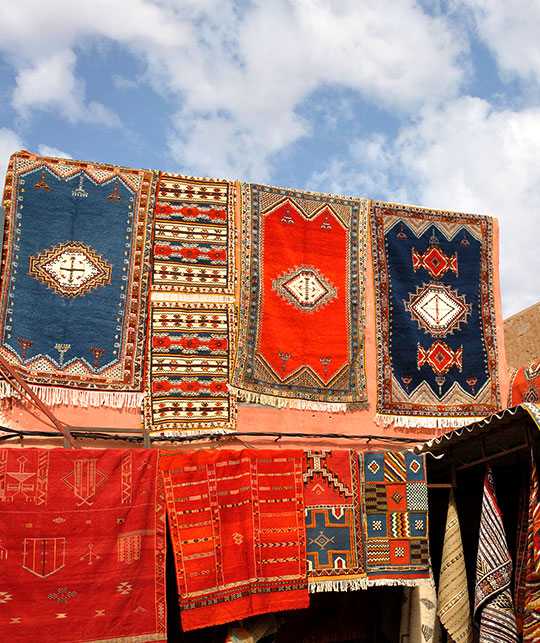
Moroccan handicrafts play a central role in Morocco’s culture and identity. As a living heritage passed down from generation to generation, they represent one of the fundamental pillars of Moroccan heritage, alongside historic monuments and cultural traditions.
Through their shapes, materials, and techniques, Moroccan handicrafts reflect a millennia-old history shaped by Amazigh, Arab, Andalusian, and African influences.
An Ancestral Craft Passed Down Through Generations
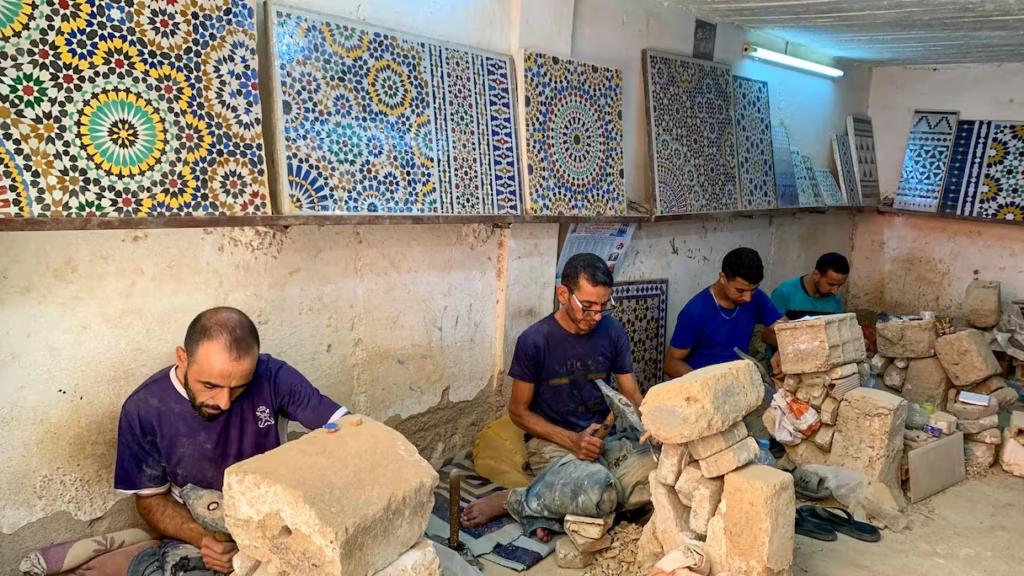
For centuries, Moroccan artisans have preserved traditional skills inherited from their ancestors. Every handmade object tells a story—one of a region, a community, and a deeply rooted cultural tradition.
These crafts form an essential part of Morocco’s cultural heritage, contributing to the transmission of values, symbols, and local identities across generations.
👉 To better understand the broader cultural context, discover our page dedicated to Moroccan heritage.
The Major Trades of Moroccan Handicrafts
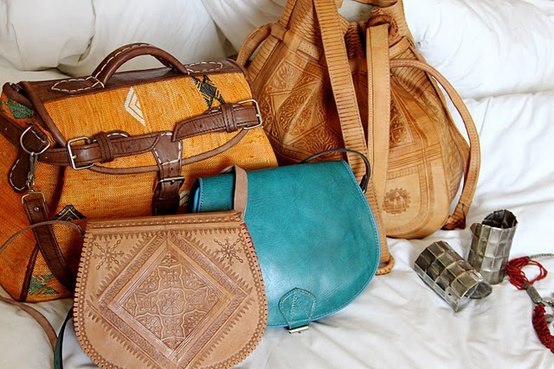
Moroccan handicrafts encompass a wide variety of traditional crafts, including:
- Pottery and ceramics, decorated with geometric and floral patterns
- Weaving and Moroccan carpets, rich in Amazigh symbolism
- Leatherwork and leather goods, crafted using ancestral methods
- Traditional jewelry, reflecting regional identities
- Wood carving and artistic carpentry
- Zellige mosaic work, an emblem of Moroccan architecture
Each region of Morocco has its own specialties, contributing to the exceptional diversity of Moroccan handicrafts.
Iconic Cities of Moroccan Handicrafts
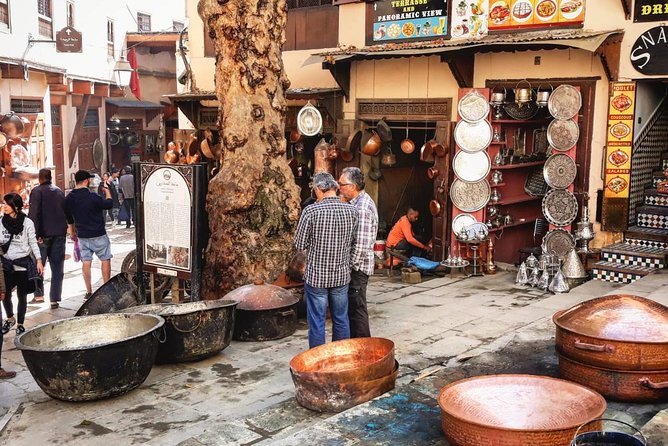
Certain historic cities play a key role in preserving and transmitting Moroccan craftsmanship. Among them, Fes stands out as a major center of traditional handicrafts. Its tanneries, workshops, and souks bear witness to skills that remain alive today.
Other cities such as Marrakech, Meknes, Essaouira, and Tetouan also contribute to the national and international influence of Moroccan handicrafts.
Moroccan Handicrafts as a Pillar of Moroccan Heritage
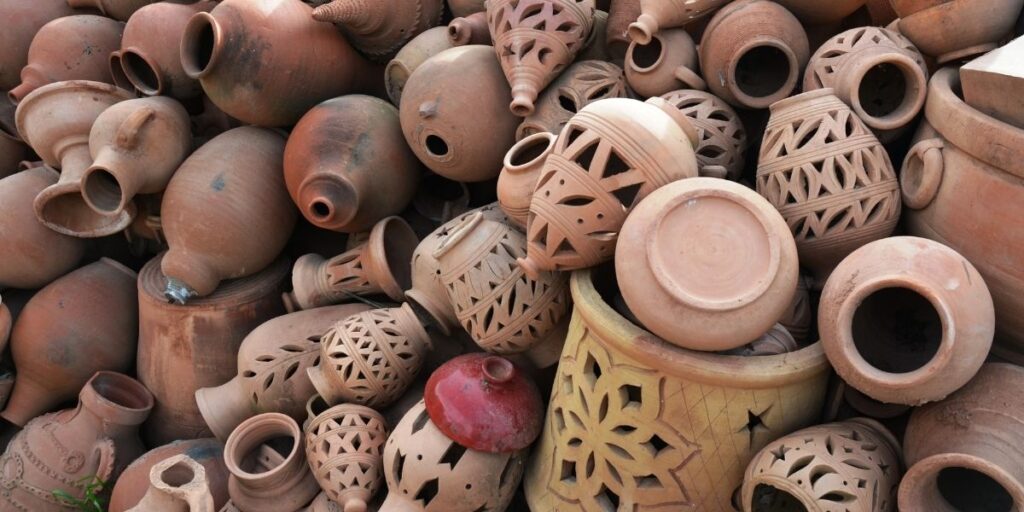
Moroccan handicrafts are not limited to decorative objects. They are closely linked to everyday life, housing, social practices, and cultural traditions.
As a living heritage, Moroccan handicrafts fully contribute to the richness of Moroccan heritage, alongside traditional architecture, popular festivals, and intangible cultural expressions.
👉 Moroccan handicrafts are an integral part of Moroccan heritage, a true reflection of the country’s cultural identity.
Preserving and Promoting Moroccan Handicrafts
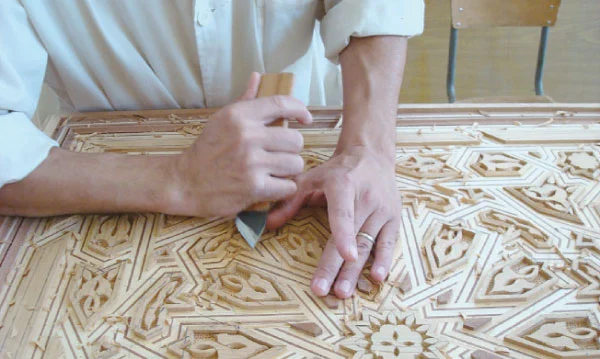
In the face of modern challenges and industrial production, preserving Moroccan handicrafts is essential. Promoting this living heritage helps to:
- protect unique traditional skills
- support local artisans and communities
- transmit knowledge to future generations
- strengthen Morocco’s cultural influence worldwide
Many initiatives today seek to combine tradition and innovation while respecting the authenticity of Moroccan craftsmanship.
Conclusion
Moroccan handicrafts represent far more than a collection of manual trades. They are the expression of a rich culture, a long history, and a living heritage deeply rooted in Morocco’s identity.
Closely linked to Moroccan heritage, they deserve to be preserved, valued, and passed on as a precious legacy for future generations.
FAQ – Moroccan Handicrafts
❓ What are Moroccan handicrafts?
Moroccan handicrafts refer to traditional crafts created by skilled artisans using ancestral techniques passed down through generations. They include pottery, weaving, leatherwork, metalwork and wood carving.
❓ Why are Moroccan handicrafts important?
Moroccan handicrafts represent a living cultural heritage, reflecting regional identities, history and artistic expression. They play a key role in preserving Morocco’s cultural traditions.
❓ What are the most famous Moroccan crafts?
Some of the most well-known Moroccan crafts include zellige tilework, Berber carpets, leather tanning, traditional ceramics, and handcrafted jewelry.
❓ Are Moroccan handicrafts still made today?
Yes, Moroccan handicrafts are still actively produced today in cities and regions such as Fez, Marrakech, Tétouan and the Atlas Mountains, combining tradition with modern creativity.
❓ How do Moroccan handicrafts reflect cultural identity?
Through symbols, colors and materials, Moroccan handicrafts express spiritual beliefs, regional heritage and social values deeply rooted in Moroccan culture.
Moroccan handicrafts are internationally recognized as part of the country’s intangible cultural heritage, with several artisanal traditions highlighted by UNESCO for their cultural and historical value